Showing posts with label 2009. Show all posts

Friday, May 21, 2010

Governator says Tesla teaming up with Toyota in Cali

Tesla Model S sedan

California Governor Arnold Schwartzenegger has apparently let slip ahead of a scheduled 5pm Pacific announcement that Tesla Motors will be teaming up with Toyota to build electric cars.

While some might speculate that the agreement could result in the re-opening of Fremont's idle New United Motor Manufacturing Inc. plant (NUMMI), SFGate says that this is somewhat unlikely. Any production agreement will likely involve the forthcoming Model S sedan, and NUMMI's facilities are significantly larger than what the model will require, as it was originally scaled to accommodate the joint venture between Toyota and General Motors which required much greater capacity. The smart money is on a new factory location, probably in Downey, CA (in Los Angeles County).

It is not yet clear what Toyota will bring to the table or what, if any money or stock is changing hands with this rumored agreement. Also, no word yet on how Mercedes-Benz feels about all this – the German automaker already has a 10 percent stake in the company after opening its coffers to the struggling EV manufacturer back in May of 2009.

[Source: SFGate]

Monday, April 26, 2010

2009 Audi Sports Car roadster/coupe TT-RS

Although the 2009 Audi TT has improved greatly on previous models in terms of general fun-factory and handling, enthusiasts still don't place it in the same league as the M Coupes, Boxter/Caymans and S2000s of the world. The S line model, which debuted in 2008, served up a big helping of improvements, but Audi fans still wanted more.
2009 Audi TT-RS
Audi is once again producing a five-cylinder engine – and a very special one at that. Arriving at dealerships this summer, the TT RS has a turbocharged 2.5-liter engine with direct gasoline injection; it produces 250 kW (340 bhp) and 450 Nm (331.90 lb.-ft.) of torque. The blazing five-cylinder engine enables the TT RS to perform extraordinary feats. In conjunction with quattro permanent all-wheel drive and a high-performance chassis, the engine makes the compact Audi TT RS a top-notch sports car – available as a coupé or roadster.
Sporty five-cylinder gasoline engines have a long legacy at Audi. The most famous is arguably the turbocharged 2.1-liter engine in the Audi quattro. The first version, which was launched in 1980, offered an impressive 147 kW (200 bhp). And the Sport quattro from 1984, directly inspired by motorsport, delivered a whopping 225 kW (306 bhp). For 25 years, turbochargers and quattro have been a dynamic formula for success.
Audi has resumed using this recipe. Designed from scratch, the five-cylinder engine combines a turbocharger with FSI direct gasoline injection to elevate the TT RS to a high-performance sports car. The TFSI delivers 250 kW (340 bhp) from a displacement of 2,480 cc (151.34 cu in): a specific output of 100.8 kW (137.1 bhp) per liter.
The power-to-weight ratio is also outstanding. In the case of the Coupé, which weighs in at a mere 1,450 kilograms (3,196.70 pounds), the power-to-weight ratio is just 4.3 kilograms per bhp.
The TT RS Coupé rockets from 0 to 100 km/h (0 to 62.14 mph) in 4.6 seconds; the Roadster needs just a tenth of a second longer. The limited top speed of 250 km/h (155.34 mph) is merely the official figure for both versions; as an option, Audi can increase it to 280 km/h (173.98 mph).
Almost even more impressive is the aggressive pulling power. The maximum torque of 450 Nm (331.90 lb.-ft.) is always available between 1,600 and 5,300 rpm. In addition, the TT RS overtakes without the slightest effort. Last but not least, its engine makes passengers’ skin tingle time and again thanks to its speedy and powerful response, its inspiring free-revving character, and its unmistakably guttural tailpipes: five-cylinder classical music by Audi!
As an uncompromising sports-car engine, the 2.5-liter TFSI is ultra-compact. Just 49 centimeters (19.29 inches) in length, it is ideally suited for transverse installation in the TT RS. And its weight of just 183 kilograms (403.45 pounds) also sets a record. The crankcase is made of vermicular-graphite cast iron. This high-tech material unites the utmost in strength with low weight; it has otherwise only been used for the large TDI engines from Audi. Perfectly placed reinforcements enhance the block’s loadability. The lightweight cylinder head, the pistons, and the connecting rod are lightweight as well as high-strength.
The ultra-powerful five-cylinder engine is extremely fuel-efficient, requiring an average of just 9.2 liters/100 km [25.57 mpg] as regards the Coupé (Roadster: 9.5 l/100 km [24.76 mpg]). Switchable flaps in the intake manifold mix the incoming air in a calculated configuration. Injected at a pressure as high as 120 bar by the common-rail system, the gasoline swirls intensely in the combustion chamber – which in turn cools the walls. This subsequently facilitates a compression ratio of 10.0:1, which is very high for a turbocharged engine. Both of the adjustable camshafts, controlled via chains, also enhance charging efficiency with respect to the air-fuel mixture.

Wednesday, April 21, 2010

Chrysler posts financial results, loses $197 million in first quarter

Chrysler


Chrysler just released its first financial report since emerging from bankruptcy last year. The company announced that while it's still operating at a net loss of around $197 million, it somehow managed to create $1.5 billion in cash during the first three months of 2010. That cash, along with an additional $7.4 billion from past cash reserves, went toward putting a dent in the company's remaining debt.

The smallest of the Big Three also managed to increase its market share one percent compared to the last three months of 2009. What's more, it produced a whopping 56 percent more vehicles in North America from January to March than it did during the same period last year, despite seeing sales decline by 5.3 percent. That bump in production is largely thanks to the fact that Chrysler idled many of its plants through 2009.

The company says that despite the loss, it's still on track to meet its goals and return to profitability by the end of this year. That's due to the fact that revenue increased by around $300 million from the fourth quarter of 2009 to the first quarter of 2010 and that the company is continuing to reduce its debt. At the same time, a rash of new models, including the long awaited 2011 Jeep Grand Cherokee will be hitting the market soon.


[Source: Chrysler via Freep]

Tuesday, April 13, 2010

Geely set to reveal modified Rolls-Royce aping limousine in Beijing

Geely GE Limousine


Never underestimate the power of a nose job. After getting in hot water with Rolls-Royce for the design of its GE limousine, Geely Automobile has reworked the majority of the car into what you see above. The Chinese automaker originally unveiled the GE at the 2009 Shanghai Motor Show, and the car looked like it had raided the Spirit of Ecstasy's wardrobe before hitting the stage. The engineers at Rolls-Royce were not amused, and threatened legal action unless the car underwent serious alterations.

Presumably in response to the Rolls dust-up, Geely has fitted the GE Limousine with an all-new nose, complete with a massive baleen grille and grinning headlights. The interior has also gone under the knife, and as a result, you'll no longer find a single throne in the rear. The company has opted for a much more traditional two-bucket design out back.

Expect to see the reworked GE at this year's Beijing Auto Show, along with a total of 58 other vehicles(!) from the company's three brands.


[Source: Autocar]

Wednesday, February 24, 2010

Rear-drive Hybrid Lexus IS, V10-powered GS F on the way?

Lexus GS 450h

It looks like Lexus is planning to go to both extremes on the green-performance continuum. When the next-generation IS appears in a couple of years, it will likely add a hybrid powertrain option. Such a move would be in keeping with Toyota's oft-stated commitment to having hybrid drive available in almost all of its platforms by the end of the decade. The IS hybrid may also spawn a new rear-drive hybrid sports car around the same time. If these IS based hybrids are consistent with the current GS450h they will definitely be biased more towards performance than efficiency, using the hybrid drive to enhance acceleration without consuming more gas.

Meanwhile, the GS – as rumored previously – could be setting its sites on the new BMW M5 and Cadillac CTS-V. Even though only 500 LF-As will be built, the 4.8-liter V10 may find its way into a much-rumored new GS-F model. The GS-F won't arrive until 2013 so it should be based on the next generation sedan. In the LF-A, the V10 has the power to compete with the German and American models but falls short of the Cadillac's torque. If the new M5 gets the uprated 4.4-liter twin-turbo V8 from the X5/X6 M, it would also be way ahead of the Lexus. Unless the Lexus engine gets boosted or the GS looses a lot of weight, this could be the only high-revving sports sedan of the pack left.

[Source: Autocar, Autocar]

Monday, January 18, 2010

Shelby unveils 2011 GT350 Mustang at Barrett-Jackson

2011 Shelby GT350

Coinciding with the 45th anniversary of the original 1965 Shelby GT350, Shelby American unveiled an all new GT350 Mustang at the opening night gala of the Barrett-Jackson auction in Scottsdale, AZ. Presented in concept form, the new GT350 features a supercharged version of the brand new 5.0-liter V8 engine in the 2011 Mustang as well as performance upgrades from Ford Racing, Borla, Cragar, Baer and more.

Unlike the GT500, the GT350 will be a post-title upgrade available from Shelby. Customers can have their 2011 Mustangs shipped directly to Shelby's Las Vegas facility to be converted or they can deliver the car themselves. Once in the hands of Shelby, each Mustang is fitted with a Ford Racing supercharger good for approximately 500 horsepower, a Ford Racing suspension system, Baer brakes front and rear, Borla exhaust system, Cragar wheels, and more. For the exterior, Shelby fits a new front fascia, front splitter, functional hood scoop tail light trim, rear deck lid filler panel and a rear fascia with center exhaust exit. White with Guardsman Blue racing stripes will be the only available color combination, which isn't such a bad thing.

Of course, all of that comes at a price. Shelby lists the GT350's MSRP at $33,995, which doesn't sound that bad until you realize it doesn't include the base car. With the 2011 Mustang GT coming in at just over $30,000, the total price of the GT350 will actually exceed that of the GT500. Does something similar to the Shelby GT built the last few years make more sense? Perhaps, but we're sure Shelby will find quite a few buyers anyway.

[Source: Shelby American]

Tuesday, January 12, 2010

Detroit 2010: Jeep Wrangler Islander

Jeep Wrangler Islander

Few cars are as iconic as the Jeep Wrangler, a vehicle that can trace its heritage directly back to General Patton storming the Third Army up to Messina. Maybe a Porsche 911, maybe. Mini? Not really. Harley-Davidson is probably the closest, but they only have two wheels and aren't cars. The reason we're harping on this heritage angle is that after a twenty-year absence, Jeep's bringing back the Islander. Having grown up in Southern California and spent many a summer bumming around the beach, the Islander brings back many happy memories.

Obviously, the Jeep Wrangler Islander is beach themed. Also, water is wet. That said, you get a tropical "Tiki Bob" decal planted next to the coordinates 21° North and 157° West. That's Honolulu for you non-gazatteer types. Similar to most old YJ-based Islanders, this version is painted ocean-blue – Surf Blue Pearl Coat if you want to get specific. You can also get the Islander in white, silver or black, but why? You also get some interior touches, like seats with Surf Blue inserts and another Tiki Bob, this time embroidered into the back seat. All that beach themed fun can be yours for just $1,120 over sticker.

Jeep also showed us the Wrangler Mountain. Long story made real short, the Mountain is the Islander with different stickers, a painted grille and no heritage/nostalgic childhood memories. There's also an odd, flat-black hunk of plastic covering most of the hood that we're scratching our heads over. And... any questions? The cost of entry is $1,820. Oh, and the degrees on the Mountain's decal are 27° South, 88 66° West. We'll let you figure out where in the world that is. Have fun!

[Source: Jeep]

Friday, January 8, 2010

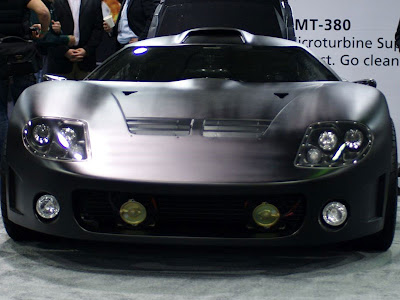
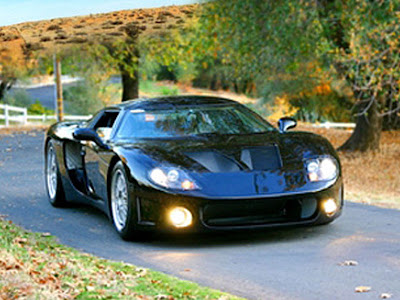
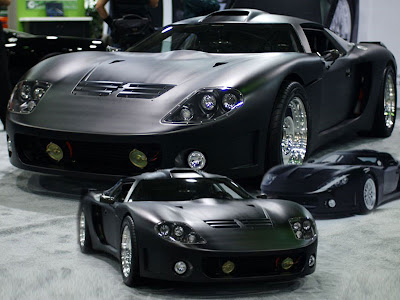
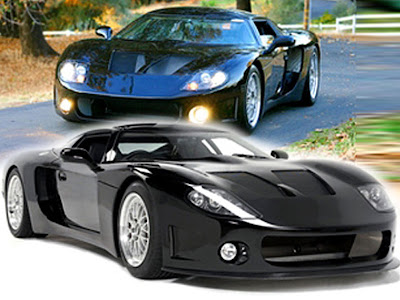
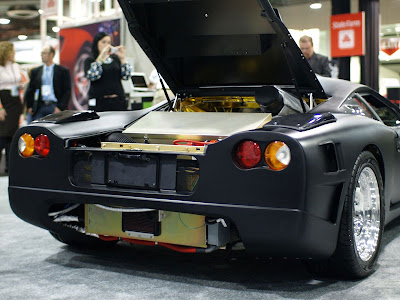
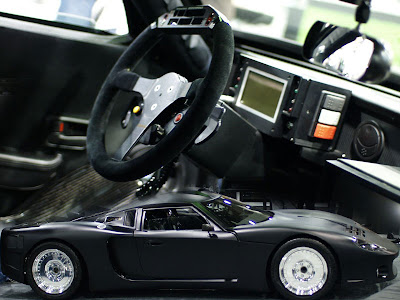
Capstone Supercar CMT-380 the high performance hybrid electric microturbine vehicle Debut at LA Auto Show

Capstone Supercar CMT-380

The Capstone CMT-380 was the surprise basement find of the LA Auto Show.The Capstone CMT-380 is essentially a prototype show car designed to highlight the technology and products available from Capstone Turbine Corporation. The concept for the high performance hybrid electric microturbine vehicle was developed by Electronic Arts (EA) Chief Creative Director Richard Hilleman.
Capstone Supercar CMT-380

After working on the car for four years, inventor Richard Hilleman was the man of the hour as he fielded questions about his unusual microturbine-lithium-ion hybrid powertrain fitted to a GTM Supercar kit body. It may still be in the test phase, but Capstone claims that the car can reach a top speed of 150mph, and is able to sprint from zero to 60mph in just 3.9 seconds.
The CMT-380 features an unusual hybrid drivetrain which uses one of Capstone's new C30 (30-kilowatt) microturbine engines to extend the range of the primarily electric powered vehicle. The turbine can be run on either diesel or biodiesel.
Capstone Supercar CMT-380

The CMT-380 features lithium-polymer battery cells that can be charged at home or at a public recharging station. While driving, the CMT-380 can operate on 100 percent battery power in zero emissions mode for a range of up to 80 miles. When the batteries reach a predetermined state of discharge, the Capstone C30 microturbine quietly fires up and recharges the batteries on the fly to extend the driving range up to 500 miles. The diesel fueled C30 microturbine requires less maintenance than traditional combustion engines and produces ultra-low exhaust emissions. Hilleman has owned an electric vehicle – a converted Porsche 550 Spyder – for at 15 years and has constantly upgraded it. The EV used to have just 30 hp with lead acids but now uses lithium ferrous batteries and has 200 hp. The 100-mile range hasn't changed, though, and so he knew it was time to build a hybrid. He decided on Capstone's diesel microturbines as the range extender.
Capstone Supercar CMT-380

He knew he could rely on them – they've been used in buses for years – but there was still the challenge of fitting the unit into a car like this. Hilleman built the CMT-380 just for himself, but Capstone is happy to show it off as a proof of concept vehicle. It would be too pricey to put into mass production (Hilleman estimated he put in about $375,000 hours of work), but it's not impossible that a high-end, expensive, limited production run could be made some day.
Capstone Supercar CMT-380

Right now, Hilleman is really happy with his creation. He especially loves the sound of the vehicle. Three feet to the side of the car, the microturbine puts out about 87 dB, but in the cabin, it's nearly silent. California law might require him to add a muffler, but it's already quiet enough without one. He's got a solution for that problem, should he need it.
The chassis and bodywork of the Capstone CMT-380 are borrowed from the Factory Five GTM kit sports car, and modified to accept the hybrid drivetrain.
Capstone Supercar CMT-380

"Capstone's CMT-380 is just now finishing up the conceptual design and first article testing stage," said Darren Jamison, Capstone President and CEO. "We plan to finalize very soon a limited production plan, in part, based on interest received at the [2009] LA Auto Show. We anticipate customers will be a select group of individuals who appreciate its many innovative high-performance and high-technology driving characteristics, long driving range and ultra-low emissions," added Jamison.

Wednesday, January 6, 2010

Top 20 Best-Selling Vehicles of 2009

Top 20 Best-Selling Vehicles of 2009

Mouse over the clock in the lower right-hand corner of your PC. Alternatively, if you're a Mac user, look at the little iCal widget down at the bottom of your screen. Whoa, look at that! It's 2010. January 6th, to be exact. And that means the final sales tallies of all automakers for the year-that-was are in. As you may have noticed yesterday, none but Subaru, Kia and Hyundai are likely to be entirely pleased with their YTD performances, falling as they did compared to sales in 2008.

Wouldn't you know, though, that not one of those three upwardly trending automakers earned a single spot on the Top 10 Best Selling Vehicles chart? To see a Korean automobile on the list, you need to expand the search to the Top 17. This fact reminds us yet again that by and large the American population tends to be a rather predictable bunch.

Think you can guess what the best-selling vehicle of 2009 was? We won't lie... you probably can. In fact, it's been the same vehicle for the past 28 years straight

[Source: Examiner.com]

Top 20 Best-Selling Vehicles of 2009


First, let's get numbers 20–11 out of the way. There are a couple of interesting highlights, such as the Chevrolet Impala, which drops four spots from 2008 down to number 12 as its Bowtie sedan stablemate, the Malibu, jumps in at number 13. We also see the Toyota Prius at number 16, falling just shy of 150,000 units sold in 2009. Finally, note the GMC Sierra at number 18. Interestingly, when the Sierra's 111,842 sales are added to its Silverado sibling from Chevrolet, that platform outsells the Ford F-150 rather handily. As you'll soon see, though, Ford does indeed have the last laugh once all full-size truck sales are counted.

  • Chevrolet Cobalt: 104,724
  • Toyota Tacoma: 111,824
  • GMC Sierra: 111,842
  • Hyundai Sonata: 120,028
  • Toyota Prius: 139,682
  • Toyota RAV4: 149,088
  • Ford Focus: 160,433
  • Chevrolet Malibu: 161,568
  • Chevrolet Impala: 165,565
  • Ford Escape: 173,044
Number 10 – Dodge Ram: 177,268


Number 9 – Ford Fusion: 180,671


Number 8 – Honda CR-V: 191,214


Number 7 – Nissan Altima: 203,568


Number 6 – Honda Civic: 259,722


Number 5 – Honda Accord: 290,056


Number 4 – Toyota Corolla: 296,874


Number 3 – Chevrolet Silverado: 316,544


Number 2 – Toyota Camry: 356,824


Number 1 – Ford F-Series: 413,625

By the Numbers - 2009

By the Numbers - 2009

Most automakers giving themselves a pat on the back for a strong sales performance in December should take a second look at the books. A good month of sales to finish off a crappy year still equals a crappy year of sales. The chart below makes this perfectly evident, as only three individual brands and no multi-brand automakers managed to make it through 2009 selling more vehicles than they did in 2008. Not surprisingly, Subaru, Kia and Hyundai (in that order) were the three brands to post an overall sales increase in 2009, with Subaru posting a double-digit rise of 15 percent. With 216,652 sales overall, Subaru now sells more vehicles in the U.S. than Volkswagen and Mazda, two direct competitors with larger lineups.

Though no multi-brand automaker can claim a sales victory in 2009, you might be surprised to learn that Ford Motor Company with its Ford, Lincoln, Mercury and Volvo brands performed the best. FoMoCo sales in 2009 fell 15 percent, a smaller drop than any of its competitors. Toyota Motor Company sales (Toyota and Lexus combined) fell over 20 percent, but the Japanese juggernaut still managed to beat Ford in number of vehicles sold (1.77 million to 1.68 million).

The rest of the industry's performance can be viewed in the chart below. Note that there were 308 selling days in both 2008 and 2009, so the percent change in volume sold will equal the percent change in the daily average sales rate.

.

Brand/Company Volume % Dec. '09 Dec. '08 DSR* % DSR Dec. '09 DSR Dec. '08
Subaru 15.43 216,652 187,699 15.43 703 609
Kia 9.75 300,063 273,397 9.75 974 888
Hyundai 8.29 435,064 401,742 8.29 1,413 1,304
Volkswagen -4.34 213,454 223,128 -4.34 693 724
Audi -5.75 82,716 87,760 -5.75 269 285
Ford -14.34 1,445,742 1,687,731 -14.34 4,694 5,480
Mercedes-Benz -15.34 190,604 225,128 -15.34 619 731
Volvo -15.96 61,435 73,102 -15.96 199 237
Mini -16.37 45,225 54,077 -16.37 147 176
Lexus -16.96 215,975 260,087 -16.96 701 844
Nissan -17.81 689,014 838,361 -17.81 2,237 2,722
Honda -18.63 1,045,061 1,284,261 -18.63 3,393 4,170
Toyota -20.61 1,554,174 1,957,575 -20.61 5,046 6,356
BMW -21.12 196,502 249,113 -21.12 638 809
Mazda -21.29 207,767 263,949 -21.29 675 857
Lincoln -22.79 82,847 107,295 -22.79 269 348
Mercury -23.24 92,299 120,248 -23.24 300 390
Porsche -24.35 19,696 26,035 -24.35 64 85
Chevrolet -25.35 1,344,629 1,801,131 -25.35 4,366 5,848
Buick -25.43 102,306 137,197 -25.43 332 445
Acura -26.84 105,723 144,504 -26.84 343 469
Infiniti -28.23 81,089 112,989 -28.23 263 367
Jeep -30.61 231,701 333,901 -30.61 752 1,084
GMC -31.09 259,779 376,996 -31.09 843 1,224
Cadillac -32.31 109,092 161,159 -32.31 354 523
Pontiac -33.31 178,300 267,348 -33.31 579 868
Dodge -33.34 522,686 784,113 -33.34 1,697 2,546
Smart -40.72 14,595 24,622 -40.72 47 80
Mitsubishi -44.85 53,636 97,257 -44.85 174 316
Chrysler -47.18 177,015 335,108 -47.18 575 1,088
Saab -59.38 8,680 21,368 -59.38 28 69
Saturn -61.35 72,660 188,004 -61.35 236 610
Hummer -67.09 9,046 27,485 -67.09 29 89
COMPANIES
Ford Mo Co -15.39 1,682,323 1,988,376 -15.39 5,462 6,456
Nissan NA -19.05 770,103 951,350 -19.05 2,500 3,089
American Honda -19.46 1,150,784 1,428,765 -19.46 3,736 4,639
Toyota Mo Co -20.18 1,770,149 2,217,662 -20.18 5,747 7,200
BMW Group -20.27 241,727 303,190 -20.27 785 984
General Motors -30.07 2,084,492 2,980,688 -30.07 6,768 9,678
Chrysler Group
-35.90 931,402 1,453,122 -35.90 3,024 4,718

Lamborghini Gallardo LP570-4 Super Veloce rendered ahead of Geneva debut

Lamborghini Gallardo LP570-4 Super Veloce

Let's make one thing very clear from the onset. The images you see above are not official shots of the Lamborghini Gallardo LP570-4 Super Veloce. They're renderings. Good renderings, mind you, but nothing more than photoshopped speculation. So with that out of the way...

It's been assumed for months that Lamborghini would unveil a final special edition Gallardo at the Geneva Motor Show this March. If the most recent reports are to be believed, the V10 will be tweaked and tuned to put out 570 horsepower through all four wheels – just as it's LP570-4 designation would imply. However, there's still no word on whether the Super Veloce moniker will be applied and what kind of weight savings will be exacted. If it's anything like the Murciélago LP670-4 SV, expect the curb weight to drop by around 200 pounds and the 0-60 time to speed by in under 3.5 seconds. And if the folks in Sant'Agata really want to bring the noise, the Gallardo SV will drop the "-4" and go rear-wheel drive like its Valentino Balboni sibling.

[Source: Lambocars via Insideline]

Aston Martin could build hybrid Lagonda, all-electric Cygnet

Aston Martin Lagonda Concept

Are hybrid drivetrains befitting of a premium luxury and performance brand? Well, that depends on who you ask. According to such diverse automakers as BMW, Mercedes-Benz, Jaguar, Rolls-Royce and even Ferrari and Lamborghini, the answer is 'yes'. Aston Martin CEO Dr. Ulrich Bez, though, reportedly believes otherwise. "The current hybrid technologies are not suited to the character of Aston Martin sports cars," explains Bez.

We're not so sure we agree, especially since Aston's long-planned Lagonda revival – which may or may not come wrapped in an ungainly SUV package – is rumored to be equipped with a hybrid powertrain. After all, the torque-rich nature of electric motors certainly wouldn't be a bad thing for a luxury tourer.

A few branches up on the green tree, Aston Martin's tiny Toyota iQ-based Cygnet minicar could quite possibly get a fully electric drivetrain, which would seem to make sense given that car's stated mission as an urban runabout for those times when a V12 Vanquish could be considered overkill. Beautiful, sonorous, splendid overkill...

Saturday, January 2, 2010

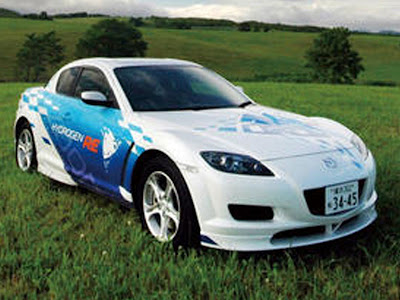
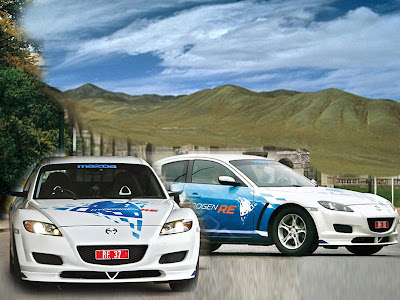
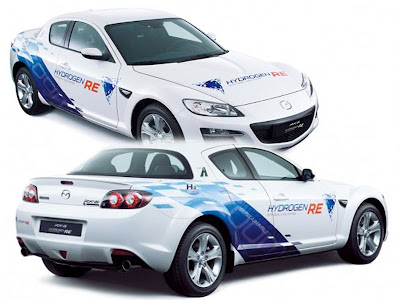
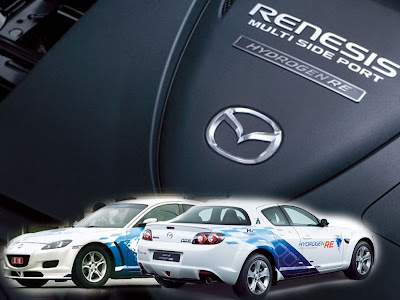
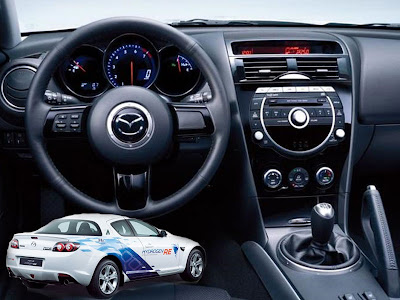
2009 Mazda Sports Car RX-8 Hydrogen RE vehicle with Norwegian specifications in HyNor

2009 Mazda Sports Car RX-8 Hydrogen RE

2009 Japan Mazda Motor Corporation (HIROSHIMA) announced that it has built the first Mazda RX-8 Hydrogen RE vehicle with Norwegian specifications, developed specifically for participation in HyNor, Norway’s national hydrogen project. The first unit will take part in ceremonies marking the official opening of HyNor’s hydrogen filling stations.
2009 Mazda Sports Car RX-8 Hydrogen RE

The initial opening ceremony will be held in Oslo on May 11, 2009. The RX-8 Hydrogen RE will then undergo certification to meet local standards and will be used for maintenance staff training. Mazda plans to commence leasing of Norwegian specification RX-8 Hydrogen RE models in Norway in summer 2009.
2009 Mazda Sports Car RX-8 Hydrogen RE

Unlike the RX-8 Hydrogen RE currently being leased in Japan, the HyNor-specification Mazda RX-8 Hydrogen RE is based on the latest European-specification Mazda RX-8 with left-hand drive and a manual transmission.
2009 Mazda Sports Car RX-8 Hydrogen RE

The HyNor project aims to enable hydrogen vehicles to travel along a 580-kilometer stretch of highway by establishing a chain of hydrogen stations between Stavanger and Oslo in Norway.
2009 Mazda Sports Car RX-8 Hydrogen RE

Mazda agreed to collaborate with HyNor on the project in November 2007 and began validation of the RX-8 Hydrogen RE’s driving performance on Norwegian public roads in October 2008.

Wednesday, December 30, 2009

Review: 2010 Audi R8 5.2 FSI V10

2010 Audi R8 5.2 FSI V10

Sigh. Another day, another 500+ horsepower supercar to babysit for a week. Such is my lot in life. Obviously I'm joking, to a degree. To be honest, I wasn't that particularly jazzed about the Audi R8 with the defanged Lambo LP560-4 V10 shoehorned behind the seats, especially as I had prior knowledge that the more proper six-speed manual R8 5.2 FS I was supposed to get had been unceremoniously replaced by the slusher, R-Tronic version. Before continuing one sentence further, am I aware that I sound like the world's most spoiled rotten brat? Oh yes.

But see, the thing is, I've driven the regular-strength V8 R8 and you know what? There's nothing wrong with it. Perfectly neutral handling, 420 eager horses and looks that kill, or at least attract eyeballs like nothing I've seen this side of pornography. While more horsepower is always welcome, the notion that the 5.2-liter V10 "only" makes 105 ponies more combined with the extra weight just didn't set off any great alarm bells of excitement. I'll put it to you like this: I was much more excited when the 2010 Nissan GT-R showed up at my door.

It's now seven days, four tanks of gasoline and 870 miles later. I drove the wheels off the world's most expensive Audi, thrice. On every type of road, over every type of surface, never venturing more than a few miles from home. I mention that last bit because discounting long trips, I've never put so many miles on a press car. Has my tune changed? Is the ten-cylinder R8 worth the $25,000 price premium over it's "lesser" sibling? Perhaps most importantly, is the Audi R8 5.2 FSI an actual, honest-to-goodness everyday supercar? Jump and find out. And if you don't feel like jumping, please for the good of your eyes, take a few minutes to peruse the gallery, as it is one of our finest ever.

There are two ways to tackle this review. The first would be to make as if I'm texting my 18-year-old soon-to-be sister-in-law: OMG! OMG! OMG! The other would be the responsible, semi-journalistic approach where for every high point, I balance it with some bad news (0-60 mph in 3.7 seconds and 3.7 mpg while doing so). For the sake of informativeness, I'm choosing the later. But let me just say one thing before we start: OMG! OMG! OMG!

Let's get this part out of the way now. There are several problems with the R8 5.2 FSI. The first is the name. R8 5.2 FSI sounds like what NASA might name a new star and is only half as sexy. The easy solution would have been to call it the RS8, but I've long ago stopped trying to make sense of Germanic automotive nomenclature (BMW X6 xDrive35i springs to mind). And since the average man on the street (and that street is probably Rodeo Drive) has zero clue what 5.2 FSI means, Audi stuck several "V10" emblems on the coupe, in case said man wants to know why your R8 costs $25,000 more than his.


The R-Tronic transmission is really terrible. Still. After 20 minutes in city traffic, I arrived at a fellow auto scribe's house and told him to drive because I simply hated the car. In full automatic mode, the R8 lurches between gears worse than any autobox I've ever experienced. Here's the awful kicker, in manual mode it's just as slow and lurchy. You have to hit the "Sport" button to get kinda quick gear changes. Compared to say the real dual-clutch in the Nissan GT-R, Audi's R-Tronic feels at least one generation behind the times. At least. Also, the GT-R's paddles are column mounted (where God and those red-color loving Italians intended them), whereas the Audi's move around with the wheel.

There are almost no situations where it's a good idea to be changing gears mid-turn, and quite a few where it's dangerous to do so, especially because wheel-mounted paddles make it all too easy to accidentally swap cogs. And these feel like they're the same paddles on the A3. The A3 that has DSG mind you, unlike the sinfully more expensive R8 5.2 FSI. And the R-Tronic transmission (only six-speeds, by the way) is a $9,000 option. That said, when the engine revs up to around 5,000–8,000 rpm, Audi's claimed gear change time of one-hundredth of a second is (almost) believable. Luckily there's an easy fix for this: get the gated manual.

Speaking of the A3, our R8 came with over $7,000 dollars worth of interior "enhancements." Going from least to most, $1,300 for an Alcantara headliner, $2,500 for carbon fiber sigma interior inlays and $3,500 for the enhanced leather package. All that filthy lucre gets you an interior that feels like... a tarted-up Audi A3 with a $1,300 alcantara headliner. In case you didn't know, you can't tell the difference between real and fake carbon fiber just by looking or touching, as they both look and feel like plastic. Also, if that's "enhanced" leather, I'd hate to have to sit in the cheap stuff. And the less said about the useless, illegible navigation system the better.


But the major issue with the R8 5.2 is the engine. Now, there is actually nothing in the world wrong with a V10 that puts out 525 horsepower, 391 pound-feet of torque and revs to 8,750 rpm faster than you can say "direct injection." Especially one that seems to get off on exploding unburned gasoline in the exhaust headers when you come off the throttle. But... that very same engine makes 552 horsepower and 398 torques when "Lamborghini" is stamped on the valve covers. While you're chewing on that, let me share our R8's price tag: $172,250 (base price is $155,000 + $2,100 gas guzzler + $1,100 destination + all the extras).

What I'm getting at is that Audi has to find buyers comfortable with spending seven quarters eighths of $200,000 on a car with a detuned motor. I don't know about you, but if I spent $172,250 on anything short of a house, I wouldn't want it to be second fiddle. I would damn well expect said high dollar purchase to be the very best it could be. In this situation, perhaps ignorance is, in fact, bliss. Meaning that Audi might be able to track down a few folks who are not only interested in its top dog R8, but who are also totally unaware of the R8/Gallardo engine connection. Last I heard, there were three of them, all living in Florida. Put another way, are you fooled by the M5 badge on the back of the 525i? Also, the cabin's a little quiet, even under full whap.

Now that all that's out of my system, OMG! OMG! OMG!


Let's start with the looks. In my mind, the R8 still isn't an attractive car, but it sure is something to look at. It's the kind of vehicle a Cylon would drive. To a strip club. Angry, alien, outlandish. Short of the TT and the Bugatti Veyron, there's nothing else (save old Karmann Ghias) that looks anything like it. Not that this is objective in any way, but more heads were turned by this Sepang Blue R8 than by any other car I've ever driven. Retina-searing yellow Lamborghini Gallardos included.

In case you come across both a debadged "regular" R8 and a V10 version and want to spot the differences, here's what they are. The V10 has three black plastic strakes across the rear fascia, while the V8 has four. Huh? Why would the more expensive model have fewer anything than the lesser model? Look closely at the new car's rump and you'll notice a big fat vent in the rear valance. That hole is to vent hot air away from the twisted exhaust headers. Take a second peak and you can actually see the collectors snaking down towards the bottom of the car. This is nothing but pure speculation on my part, but it wouldn't surprise me if the V10 mule that burned down to its aluminum frame on the Nürburgring didn't in fact have the V8's sealed rear end. More empirically, you can feel the heat flowing out of the twin slots after the R8's been in park for 30 minutes.


Speaking of venting, the V10 model has faux-ovoid exhaust tips like the RS4 and RS6. Faux because if you look past them you see the two actual exhaust tips (the Lexus IS F pulls this same trick). The big R8 also has flared side blades, which I quite like, In the same way that I like the asymmetrical sill-air scoops on the Murcielago LP640-4. Awkward for a very good reason – pulling more cold air into the famished engine. The rear portion of the underbody is also different from the V8, looking as if it might provide some downforce. Up front, the headlights are different and then, of course, you have have the 24 LED daytime running lights on each side, there to symbolize Audi's dominance at the 24 Hours of Le Mans. To steal a line from Clarkson, that bit of trivia is sure to impress your date...

Finally, we come to driving. The quickest way to sum up the R8 5.2 FSI is to call it a big, fat, fast Porsche Cayman S, which, please believe me, is a huge compliment, as the Cayman S is perhaps the best handling car I've ever driven short of something severe and doorless like a Lotus Se7en. The big, mid-engined Audi has absolutely no understeer. Shockingly, and quite seriously, none. I know this because after 45 minutes of straight-up canyon terrorism, I got the brakes to fade. I panicked, dug deep into the ABS, then turned the wheel hard to the left – a classic recipe for understeer if there ever was one. To my massive surprise -- I was anticipating that nasty feeling of skipping along on the right front tire -- the R8 just turned. Impressive for any car, but in one that weighs 3,726 pounds? One word: wow.


In big powerful monsters like the Nissan GT-R and Chevrolet Corvette Z06, the handling is without question great. That said, they will understeer when pushed. Even the incredible-for-its-price Mazda MX-5 Miata will plow like a farmer if you cross it up enough. Not the R8. Other modern cars that don't understeer? Porsche Boxster, Porsche Cayman, a couple of $200,000+ supercars, and that's about it. Again, hugely impressive. However, the steering feel is a little numb (like a certain Nissan, you just sort of saw at the wheel and the car goes exactly where you point it). There's basically no feedback, either. This is a little surprising as fully 90 percent of the R8's power is routed to the rear wheels, though I suppose when you have the wheel cranked in anger, some computer is telling the tranny to mete out more juice to the front wheels. Anyhow, she handles like a peach. An angry, tarmac-ripping peach.

The chassis magic doesn't stop there. The R8 is so well set up, balanced and over-tired (Pireli Pzero 235/35/19Rs up front, 295/30/19Rs out back) that not only is the grip seemingly never ending, but you have to really work hard to induce oversteer. 8,000 rpm and some janky, ill-advised steering wheel inputs seems to do the trick. Back to the grip for a moment, it's just tremendous, and rivaled only (in my mind) by the Nissan GT-R, the latter being the best road-hugger I've ever driven. One way to look at the R8 5.2 FSI is 9/10s of a GT-R for double the money. However, another is to understand that Nissan sells the GT-R for half of what it cost them to build and this here Audi is about 98/100s as good to drive. Maybe 99...


Finally, there's the thrust from that mighty, though slightly devolved V10. It's epic, though certainly not as quick in a straight line as the LP560-4 Gallardo. In fact, we know that the Lambo will beat the Audi to 60 mph by three-tenths of a second. And if you can tell the difference between 3.4 and 3.7 seconds, you're a liar. Or very close to one. At the end of the day, a 3.7-second blast to 60 mph is only achieved using the car's launch control (sport suspension on, sport transmission on, hold down the ESP button for about six seconds, left foot on brake, right foot floors the throttle, side-step the brake pedal, buh-bye) and doing that more than once is clutch-homicide. Bottom line, does the V10 R8 feel supercar fast? Yes, it most certainly does.

The real story is what the R8 5.2 FSI feels like when you've just blipped the motor up to 8,000 rpm and have the steering wheel rheostated at 45 degrees before dusting off a sharp turn. It's beautiful. It's glorious. It's wondrous. It's revelatory. Forget all that nonsense I spewed earlier on – nothing but words. Like any supercar – and oh, my yes this sucker is super – all you want to do is push harder and dig deeper. Everyday? I should be so lucky. And I truly wish that every pistonhead everywhere could experience the R8 5.2 FSI on their favorite road approaching full clip. Because as far as cars go, this $172,250 seems like money very well spent.

[Source: Autoblog]